 The FalconFirst Manifesto
Build only what
deserves to exist.
How do you know what to build before you bet?
I asked that question for over seven years. From product leaders to research experts across industries. Nobody had the answer.
So we built it.

Six strangers in a room
In 2019, I sat behind one-way glass and watched six strangers shape the future of a product used by 2.5 million businesses.
The product was mine. As Head of Product at JPMorgan Chase, I ran the platform that businesses use to manage their cash and protect their accounts. To learn what our users needed, we hired an outside agency to run a two-day research study. Twenty minutes into the first session, I couldn't tell whether the person across the glass had ever used our product. By the third interview, I spotted a design flaw. I asked the researchers if we could fix it before the next participant. They agreed it was real. The answer was still no. That would contaminate the results. So we spent the rest of the study testing a product I knew I'd never ship.
Sixty years ago, the ad men on Madison Avenue tested ideas from behind the same glass. We are still doing it.
Eight weeks of designs, recruiting, and scheduling had already gone into that room. I flew home and waited another four for a report built on the opinions of six people, filtered through the interpretation of one researcher. The problem wasn't the researchers, the designers, or the participants. It was the process. Every method product teams use today, from focus groups and usability labs to surveys and panels, breaks in the same three places: speed, scale, and signal. We were manufacturing evidence for decisions that deserved the TRUTH.

Duct-taping it together
So I built my own workaround.
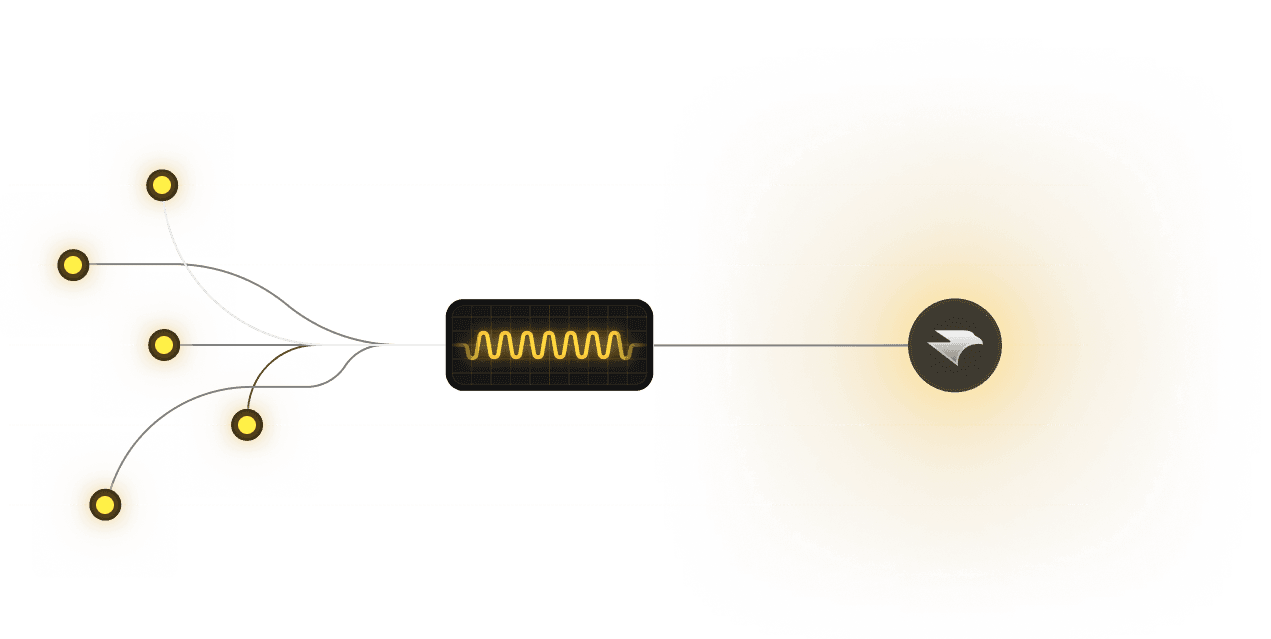
I had relationships with the bankers who sat closest to our customers, and when the official research path was too slow, I sent them Figma prototypes. They put my ideas in front of business owners who had complained about those exact problems. In a couple of days, I could hear from fifty real customers instead of six strangers in a room. When an engineer or stakeholder challenged a direction, I wasn't defending my opinion. I was bringing back the voice of the customer.
The workaround worked. Products I shipped this way are still foundational to Chase today. But it ran on personal relationships and manual effort, and it taught me the lesson that would take another seven years to build:
Customers want a say in what gets built for them. But a handful of people paid to be in the room can't speak for millions who aren't. Product teams need signal at scale, from customers living the problem, and fast enough to shape the roadmap before it becomes a commitment.
The tap on the shoulder
For years, I assumed someone else had already solved this.
At the Money Experience Summit in Utah, I asked a panel of leaders from Google, IBM, and other Fortune 50 companies a simple question: how do you know what to build before you bet? They told me to “talk to more customers.” The same hollow answer everyone repeats, with no account of how to do it at the scale of thousands of real customers, in days, without fooling yourself.
After the panel, someone tapped me on the shoulder. He had run more than a thousand research studies over two decades, and he told me the problem I had just described was real, expensive, and ignored. The most experienced researcher in the room was confirming the thing I had not let myself believe.
Nobody had fixed this.

Twenty-seven companies
With JPMorgan behind me, I ran the build-versus-buy: twenty-seven research and analytics companies, Silicon Valley to Spain.
Every one pitched the product they already had. The analytics tools measured what happened after launch: clicks, sessions, heatmaps. The research tools tested before launch the same way the agency had: random strangers, rented rooms, weeks. All of it ended at a dashboard and a gut call. Nothing answered whether something deserved to be built before engineers spent months on production code.
So in 2022, I pulled together a small team and we tried to build it ourselves. Conviction doesn't beat physics. There was no practical way yet to generate working prototypes fast enough, capture behavior at scale, and turn it all into a recommendation a product leader could trust. I disbanded the team and kept the problem.
Nobody had fixed this.
I couldn't fix it either.
Not yet.

The technology caught up
In 2025, the technology caught up.
AI matured from a tool that completes your sentences into agents that do real work. Working prototypes could be generated in minutes. Behavior could be captured at scale. Evidence could be weighed by math instead of vibes. Every piece I had been waiting for arrived at the same time.
I turned years of frustration into a full product specification and vibe-coded the first version of Falcon Terminal myself. For the first time, the product in my head was on a screen. I demoed it to more than a hundred product managers from JPMorgan, Meta, Amazon, IBM, Microsoft, and other enterprise teams. The response was unanimous. The only thing that varied was how long they’d been waiting.
“I wish I had this right now.”
“Why didn’t you build this ten years ago?”
“How do we get this?”
The demos became a waitlist. The waitlist became active conversations with some of the largest product organizations in the world. We had closed our first funding within weeks of the first demo.
And the team came together person by person. The researcher who tapped my shoulder in Utah leads our research and go-to-market today. Our head of engineering, a fourteen-year enterprise systems builder, was on the 2022 team I disbanded. He came back. Our AI lead is a published researcher who turned down Fortune 500 offers to be here. Our head of product ran product beside a CEO from Series B through acquisition. The former CTO of JPMorgan advises us, alongside an operator who helped scale Lovable and a growing bench of advisors, each added against a gap we knew we had. Every one of them worked with me before they worked for me. Every one of them left something safer to build this.
The answer.
AI has made building faster than ever. That means bad ideas move faster too. The question is no longer can we build this. It is should we.
FalconFirst is our answer.
You describe an idea. Falcon turns it into a working prototype, puts it in front of your real customers in their world, not a lab, and captures not just what they say, but what they do. Then it hands you the call, with the evidence to defend it:
Pause · Pivot · Pursue
Bad bets die before code, before capital, and before ego.

A language model never estimates a probability and never makes the call. A deterministic engine does the math, so every recommendation is auditable and reproducible. Every decision comes with a receipt.
Serious enterprises don't need faster focus groups. They need evidence they can trust.
The third era
The Waterfall Era
plan everything, build everything, then hope.
The Fail Fast Era
ship fast, fail fast, call the waste speed.
The Evidence Era
prove, decide, then build
Every era begins with a founding document. Waterfall had its paper in 1970. Fail fast had the Agile Manifesto in 2001.
You are reading the third.
The winners of this era won’t be the teams that ship the most. They’ll be the teams that waste the least.
UP TO
80%
of software features go essentially unused
NEARLY
$30B
spent every year building things nobody asked for
By good teams who would have built the right thing, if they had a way to know.
Now they can.
Building the wrong thing shouldn't be the cost of doing business. The Evidence Era belongs to the teams that build with their customers, not around them. They'll start with Falcon, first.


Build only what deserves to exist.

Varun J. Vincent
Founder & CEO, FalconFirst · Chicago
Start with Falcon, first.
Operators and investors who want to help build this:contact@falconfirst.ai